
Table of Contents
Think about how often you use your teeth. You bite into toast at breakfast, chat with friends at lunch, and smile at people throughout the day. Now imagine doing all of that without any teeth at all. For people who have lost most or all of their natural teeth, this is real life. Simple tasks like eating an apple or saying certain words can become hard.
Full dentures help people get those everyday moments back. They replace a full set of missing teeth and can restore your smile, your bite, and your confidence. In this guide, you will learn what full dentures are, how they are made, what the first few weeks feel like, and how to look after them so they last.
What Are Full Dentures?
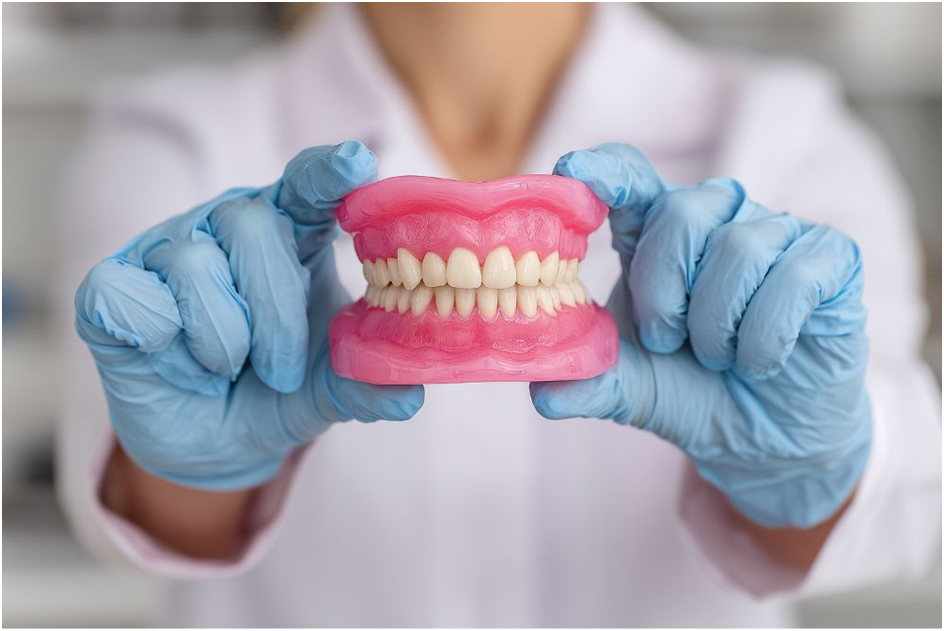
Full dentures are removable false teeth that replace all the teeth in your upper jaw, lower jaw, or both. They are sometimes called complete dentures.
Each denture has two main parts:
- The base: This is the gum-coloured part that sits on your gums. It is usually made of a strong, light plastic called acrylic. On the upper denture, the base also covers the roof of your mouth.
- The teeth: These are the false teeth attached to the base. They are made from acrylic or porcelain and are shaped and coloured to look like natural teeth.
An upper denture usually stays in place through suction. The base creates a light seal against the roof of your mouth. A lower denture has less surface to grip, so it relies more on the shape of your gums and the muscles of your cheeks and tongue.
Why Do People Need Full Dentures?
Losing all your teeth may sound rare, but it is more common than many people think. Studies show that a large number of older adults have lost all their natural teeth. The most common causes include:
- Gum disease. This infection slowly damages the gums and bone that hold teeth in place. Over time, teeth can become loose and fall out.
- Tooth decay. Cavities that are not treated can destroy teeth beyond repair.
- Injury. Accidents or sports injuries can cause tooth loss.
- Ageing. Years of wear, along with health conditions, can make teeth weaker.
Without teeth, the muscles in your face lose support. This can make cheeks and lips look sunken. Full dentures help fill out the face and give it a more natural shape.
What Are the Different Types of Full Dentures?
Not every full denture is the same. The right type depends on your health, your budget, and how soon you need teeth.
Conventional Full Dentures
These dentures are made after all remaining teeth have been removed and the gums have healed. Healing usually takes about two to three months. Because the gums have settled, conventional dentures often fit well from the start. The downside is that you may go without teeth during the healing period.
Immediate Full Dentures
Immediate dentures are made before your teeth are removed. They are placed on the same day as the extractions, so you never have to go without teeth. However, gums shrink as they heal. This means immediate dentures often need to be relined or adjusted a few months later to keep a good fit.
Implant-Supported Dentures
These dentures snap onto small posts called dental implants, which are placed in the jawbone. Implants give the denture a much firmer hold, so it does not slip when you eat or talk. This option costs more and needs surgery, but many people find the extra stability worth it.
How Are Full Dentures Made?
Getting dentures is a step-by-step process. It usually takes several visits over a few weeks.
First, a dental professional examines your mouth and talks with you about your needs. Next, they take impressions, or moulds, of your gums. These moulds show the exact shape of your mouth.
Then, measurements are taken to record how your jaws meet. This helps the new teeth line up with your natural bite. You will also choose the shape and shade of your teeth so your smile looks natural for your face.
After that, you may try on a wax model of the denture. This lets you check the look and fit before the final version is made. Small changes can be made at this stage. Finally, your finished dentures are fitted, and any rough or tight spots are adjusted.
If you are exploring new full dentures lower hutt clinics offer, ask how many fitting visits are included and how adjustments are handled after you get your dentures.
What Is It Like Adjusting to New Dentures?
The first few weeks with new dentures can feel strange. This is normal. Your mouth needs time to get used to something new.
Eating With New Dentures
Start with soft foods like eggs, yoghurt, pasta, and cooked vegetables. Cut food into small pieces and chew slowly using both sides of your mouth at the same time. This keeps the dentures balanced. Over a few weeks, you can slowly add firmer foods back into your diet.
Speaking With New Dentures
Some words may sound different at first, especially those with “s” or “f” sounds. Reading out loud or singing along to music can help your tongue and lips adjust faster. Most people find their speech returns to normal within a few weeks.
Common Early Feelings
You may notice extra saliva, mild soreness, or a feeling that your mouth is full. These usually fade as your mouth adjusts. If a sore spot does not heal within a few days, see your dental professional. A small adjustment can make a big difference in comfort.
For example, picture someone who gets new dentures and finds that the lower one rubs against the gum. They try to put up with it for weeks. When they finally go back, a quick five-minute adjustment fixes the problem. Getting help early would have saved them a lot of discomfort.
How to Care for Your Full Dentures
Good care keeps your dentures clean, comfortable, and looking their best.
- Remove and rinse your dentures after eating to wash away food.
- Brush them daily with a soft brush and a cleaner made for dentures. Regular toothpaste can be too rough and may scratch them.
- Soak them overnight in water or a denture-soaking solution. This keeps them moist and helps them hold their shape.
- Clean your gums, tongue, and the roof of your mouth with a soft brush to remove plaque and keep your mouth healthy.
- Handle them carefully. Dentures can break if dropped, so clean them over a folded towel or a sink filled with water.
- Avoid hot water, which can warp the plastic.
Taking your dentures out at night also gives your gums a chance to rest.
How Long Do Full Dentures Last?
With good care, most full dentures last about five to ten years. Over time, your gums and jawbone slowly change shape. This can make dentures feel loose, even if they still look fine.
Signs it may be time for a reline or replacement include:
- Dentures that slip or click when you talk
- Sore spots that keep coming back
- Trouble chewing food
- Cracks, chips, or worn-down teeth
Regular check-ups help catch these problems early. Many people looking into new full dentures lower hutt services are surprised to learn that a reline can often restore the fit without replacing the whole denture.
What Affects the Cost of Full Dentures?
The cost of full dentures can vary. It depends on the type of denture, the materials used, and whether you need tooth removal or implants first. Immediate and implant-supported dentures usually cost more than conventional ones. Some providers offer payment plans to spread the cost. A well-fitted denture is a long-term investment, so it pays to compare what each quote covers. Ask for a clear quote before treatment begins so you know what is included.
Final Thoughts on Full Dentures
Full dentures can give you back the ability to eat, speak, and smile with confidence. They support your face, improve your bite, and help you enjoy daily life again. There are several types to choose from, and each one can be fitted to suit your mouth.
The first few weeks take some patience, but most people adjust well with time and practice. With good daily care and regular check-ups, your dentures can serve you well for years. If you are missing most or all of your teeth, book a visit with a dental professional to talk about your options.